

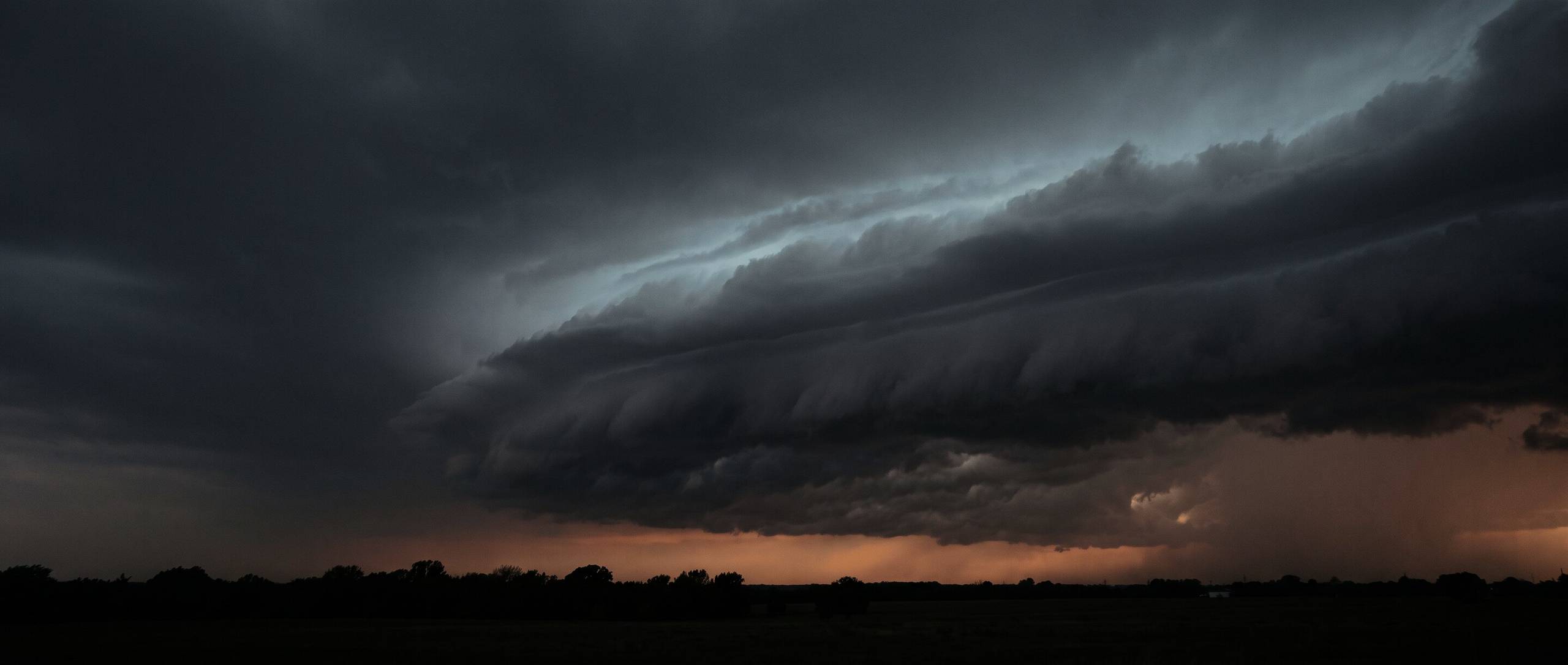
Storm damage
After the Storm, Know Your Next Step.
Hail damage isn't always easy to spot. Learn how to identify potential roof damage, understand the insurance process, and know what steps to take before moving forward with repairs.
Signs your roof took a hit
You can spot most of these from the driveway.
- Dents in gutters, downspouts, and the fins on your AC unit
- Granules piling up in gutters or at the bottom of downspouts
- Bruised or bald spots on shingles, often in a splatter pattern
- Cracked or dented pipe boots and roof vents
- Neighbors getting new roofs (adjusters are already working your street)
Any one of these is worth a free inspection. Two or more, call today.
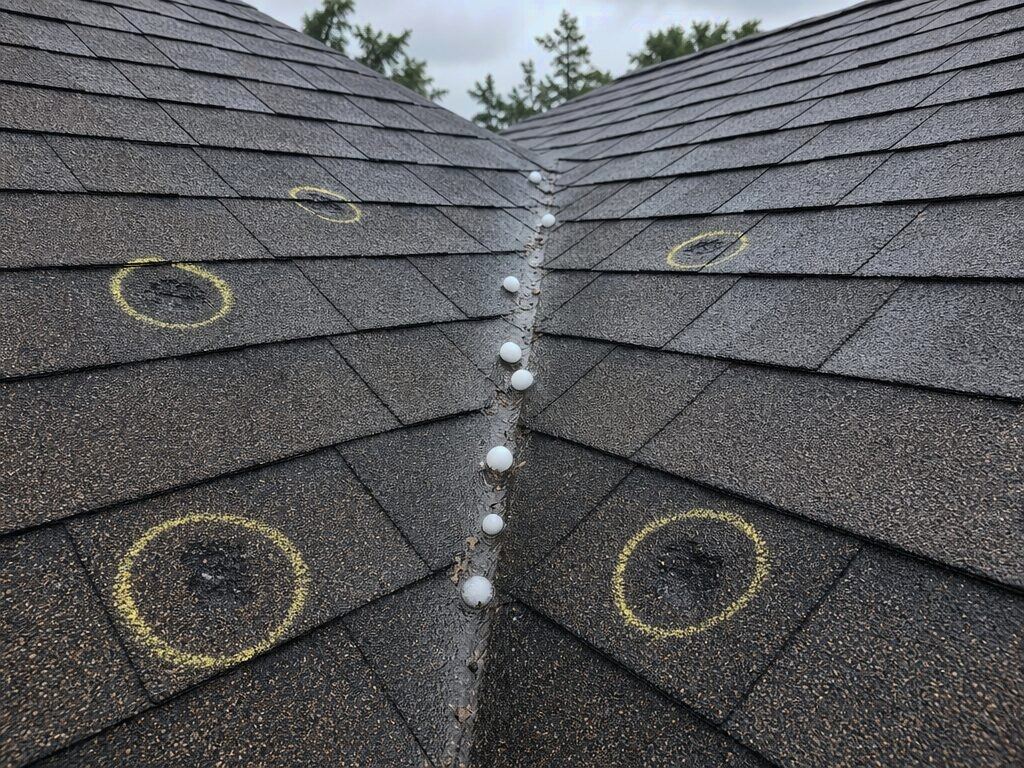
How big was the hail?
Drawn to scale. Anything from a quarter up can damage an asphalt roof, even if it looks fine from the driveway.
Pea1/4 in
Bounces off. Rarely a problem.
Quarter1 in
Severe hail starts here. Bruised shingles and lost granules.
Golf ball1.75 in
Widespread granule loss.
Baseball2.75 in
Cracked shingles and dented vents.
Softball4 in
Punctures and decking damage.
Severe hail starts at 1 inch. Not sure what fell? The inspection is free.
The claim, step by step.
What we do, and what you do, at each step.
- 01
Inspection
We walk every slope and photograph every hit.
- We do
- Walk the roof, mark the hits, and write up a photo report.
- You do
- Nothing yet. We come to you.
- 02
Filing
You file the claim: call your insurer and give them the date of the storm. We send you the photo report and a written assessment to go with it.
- We do
- Send you the photo report and our written assessment.
- You do
- Call your insurer with the storm date and open the claim.
- 03
The insurer's estimate
Your insurer writes its estimate and settles the claim with you. If it leaves out damage we documented, we send the insurer the photos and details so their adjuster can review it.
- We do
- Compare their estimate with ours, send your insurer documentation of anything missed, and tarp in the meantime if water is getting in.
- You do
- Settle the claim with your insurer, and sign the work agreement when you're ready.
- 04
Build and close
We rebuild to code and send you the final invoice for your insurer.
- We do
- Install the new roof and send you the final invoice.
- You do
- Pay the final invoice.
Most policies expect a claim to be filed promptly after a storm. Not sure there's damage? The inspection is free, and whether to file is up to you.
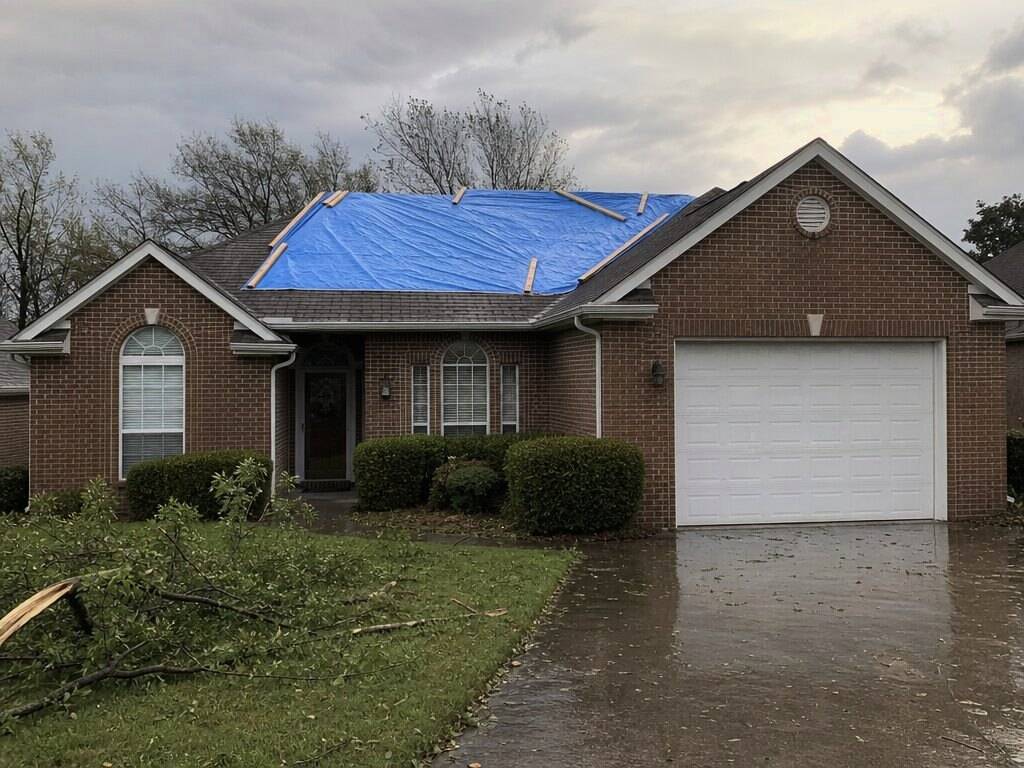
Emergency tarping
When water is coming in, the first job is to stop it. We tarp the damaged section, secure it with wood strips, and photograph everything for your claim. Then we schedule the real repair.
A tarp is a bandage, not a fix. It's there to keep the water out until the real repair.
Storm questions
Had a storm? Start here.
Free inspection, photos you keep, and an honest answer about whether your roof was damaged.
(817) 896-4230We answer 24/7, every day.